



Skip to content
American Academy of Audiology
  • PRACTICE RESOURCES
    • Practice Guidelines and Standards
    • Coding
    • Practice Management Toolkits
      • Audiology Billing Toolkit
      • Audiology Communications Toolkit
      • Audiology Documentation Toolkit
      • Audiology Practice Startup Toolkit
    • Medicare/Medicaid
    • Compliance
    • Quality Payment Program
    • Patient Resources
  • EDUCATION & EVENTS
    • Event Calendar
    • Continuing Education
    • Online Learning and Certificate Programs
    • Jerger Future Leaders of Audiology Conference
    • Research Grants and Scholarships
    • Faculty and Preceptor Resources
  • AAA ANNUAL CONVENTION
    • Attend
      • Registration
      • Hotel Information
      • Travel Information
      • Safety and Travel Tips
      • Child Care Options
      • Press and Media
    • Program and Events
      • Call for Abstracts
      • Schedule-at-a-Glance
      • Open Houses
    • Exhibit Hall
      • Expo Schedule
      • Exhibitor List
      • Expo Floor Plan
    • Exhibitors
      • Become an Exhibitor
      • Exhibitor Registration and Housing
      • Exhibitor Setup
    • Sponsors
      • Become a Sponsor or Corporate Partner
      • Corporate Partners and Sponsors
  • NEWS & PUBLICATIONS
    • News
    • Audiology Today
    • Journal of the American Academy of Audiology
    • Podcast
    • Advertising
    • Press and Media Information
    • Permissions, Reprints, and Translations
  • CAREERS
    • Career Center
    • Credentialing
    • Become an Audiologist
    • Doctoral Programs in Audiology
    • Recruiting Future Audiologists
    • New Professional Toolkit
  • ADVOCACY
    • Federal Affairs
    • State Affairs
    • Advocacy Ambassador Toolkit
    • Public Policy Statements
    • Government Relations News
    • Legislative Action Center
    • Public Awareness
  • CONSUMERS
    • What Is an Audiologist
    • Find an Audiologist
    • Hearing and Balance Symptoms and Conditions
    • Managing Hearing Loss
    • Seniors and Hearing Loss
    • Children and Hearing Loss
    • OTC Hearing Aid
  • ABOUT THE ACADEMY
    • Leadership
    • Committees and Task Forces
    • Get Involved
    • Honors and Awards
    • Sponsorships and Corporate Partners
    • Contact Us
  • MEMBERSHIP
    • Member Benefits
    • Membership Renewals
      • Membership Renewal FAQ
    • Membership Types and Dues
    • Member Referral Program
    • Gift an Academy Membership
    • Member Recognition

  • Get Involved
  • Donate
  • Renew
American Academy of Audiology
Member Login / Directory
Get Involved Donate Renew
  • PRACTICE RESOURCES
    • Practice Guidelines and Standards
    • Coding
    • Practice Management Toolkits
      • Audiology Billing Toolkit
      • Audiology Communications Toolkit
      • Audiology Documentation Toolkit
      • Audiology Practice Startup Toolkit
    • Medicare/Medicaid
    • Compliance
    • Quality Payment Program
    • Patient Resources
  • EDUCATION & EVENTS
    • Event Calendar
    • Continuing Education
    • Online Learning and Certificate Programs
    • Jerger Future Leaders of Audiology Conference
    • Research Grants and Scholarships
    • Faculty and Preceptor Resources
  • AAA ANNUAL CONVENTION
    • Attend
      • Registration
      • Hotel Information
      • Travel Information
      • Safety and Travel Tips
      • Child Care Options
      • Press and Media
    • Program and Events
      • Call for Abstracts
      • Schedule-at-a-Glance
      • Open Houses
    • Exhibit Hall
      • Expo Schedule
      • Exhibitor List
      • Expo Floor Plan
    • Exhibitors
      • Become an Exhibitor
      • Exhibitor Registration and Housing
      • Exhibitor Setup
    • Sponsors
      • Become a Sponsor or Corporate Partner
      • Corporate Partners and Sponsors
  • NEWS & PUBLICATIONS
    • News
    • Audiology Today
    • Journal of the American Academy of Audiology
    • Podcast
    • Advertising
    • Press and Media Information
    • Permissions, Reprints, and Translations
  • CAREERS
    • Career Center
    • Credentialing
    • Become an Audiologist
    • Doctoral Programs in Audiology
    • Recruiting Future Audiologists
    • New Professional Toolkit
  • ADVOCACY
    • Federal Affairs
    • State Affairs
    • Advocacy Ambassador Toolkit
    • Public Policy Statements
    • Government Relations News
    • Legislative Action Center
    • Public Awareness
  • CONSUMERS
    • What Is an Audiologist
    • Find an Audiologist
    • Hearing and Balance Symptoms and Conditions
    • Managing Hearing Loss
    • Seniors and Hearing Loss
    • Children and Hearing Loss
    • OTC Hearing Aid
  • ABOUT THE ACADEMY
    • Leadership
    • Committees and Task Forces
    • Get Involved
    • Honors and Awards
    • Sponsorships and Corporate Partners
    • Contact Us
  • MEMBERSHIP
    • Member Benefits
    • Membership Renewals
      • Membership Renewal FAQ
    • Membership Types and Dues
    • Member Referral Program
    • Gift an Academy Membership
    • Member Recognition
wave-mark-white
June 18, 2019

I Hear Fine, Others Need to Just Stop Mumbling

  • Audiology in the News

As audiologists, it is common to come across patients who deny hearing difficulty or rationalize those difficulties to external variables. This brings up the question, how prevalent is report of self-perceived good hearing despite audiometric evidence of hearing loss?

Using data from the National Health and Nutrition Examination Survey (NHANES), Curti et al (2019) reported on the prevalence and variables related to self-reported good hearing despite audiometric evidence of hearing loss applying several definitions (at least one frequency >25 dBHL in either ear; pure-tone average (PTA4) of 500, 1000, 2000, and 4000 Hz > 25 dBHL; and PTA > 40 dBHL). Self-reported good hearing status was based on a question of general hearing condition, which read “Which statement best describes your hearing (without a hearing aid)? Would you say your hearing is good, that you have a little trouble, a lot of trouble, or are you deaf?”

Audiometric data were collected in 3,853 participants from two NHANES cycles. After excluding for missing data or evidence of conductive pathology, 2,681 participants remained. This group was then limited to those with hearing loss based on the three definitions. Based on the any frequency >25dBHL definition 68.5% of the participants self-reported good hearing. Applying the PTA4 criteria >25dBHL, 43 percent self-reported good hearing. When limited to participants with a moderate hearing loss or greater (PTA4 > 40 dBHL), the report of good hearing was limited to 22 percent. Variables that increased the odds of reporting good hearing despite audiometric evidence of hearing loss included self-reported good general health and better diet quality. Variables that decreased the odds of self-reported good hearing included presence of tinnitus, history of noise exposure, and other health comorbidities (e.g., being overweight, balance issues). Curti et al also examined the relationship of self-reported hearing status to reported use of hearing aids. Participants with audiometric evidence of hearing loss that self-reported hearing difficulty were 16 times more likely to report use of hearing aids.

Overall, the findings suggest that self-reported hearing status is clearly related to severity of hearing loss based on audiometry, i.e., the greater the thresholds the lower the self-report of good hearing. Nonetheless, a high number of individuals with hearing loss (43 percent) will self-report good hearing. This is likely because the majority of the individuals in the dataset had what would be considered a mild hearing loss (75 percent). This high prevalence of mild hearing loss is consistent with other NHANES analyses using different cycles (Goman et al, 2015). The authors report that the high prevalence of mild hearing loss and lack of perceived hearing difficulty as a contributing factor to low utilization of hearing aids. In the absence of significant communication setbacks or presence of related comorbidities (e.g., tinnitus), those with mild hearing loss may dismiss subtle communication difficulties, a negative consequence is potential delay in identification and management.

Reference

Curti et al. (2019) Prevalence of and characteristics associated with self-reported good hearing in a population with elevated audiometric thresholds, JAMA-Oto Head & Neck. June 6.

Share this

Related Posts

Tympanostomy Tubes Found in the Middle Ear Space: A Case Report

Cochlear Implant Satisfaction 

Mental Health Treatment by Adults in the United States

Recent Posts

Government Relations News

Q4 SPAN Meeting to Focus on the ASLP-IC Compact

The American Academy of Audiology’s State Policy Advocate Network (SPAN) will hold its fourth-quarter meeting on October 28, 2026, from 8:00–9:00 pm ET. The meeting…
Read More
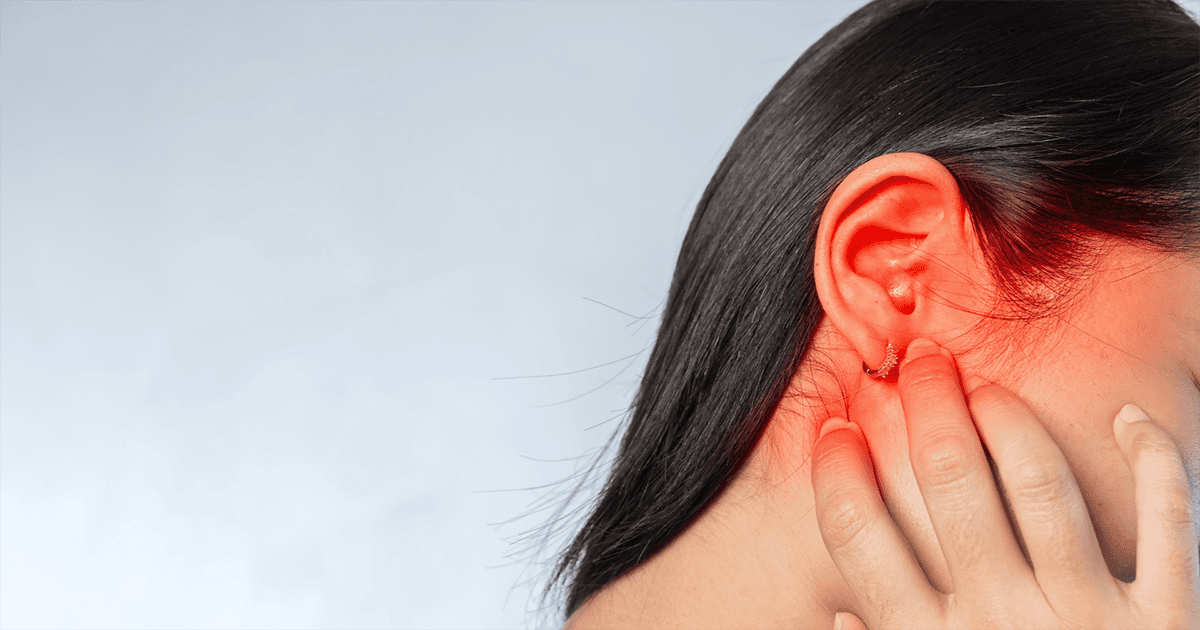
Close-up of a woman examining her ear, highlighting audiology and hearing health services.
Audiology in the News

Tympanostomy Tubes Found in the Middle Ear Space: A Case Report

The placement of pressure equalization (PE) tubes is common procedure and often used for management of otitis media with effusion (OME), recurrent acute otitis media…

Read More
Audiology in the News

Cochlear Implant Satisfaction 

Approximately 118,000 adults and 65,000 children in the United States have cochlear implants (CI) (National Institutes of Health, 2021). Most CIs require an external processor,…

Read More
wave-mark

Not a Member?
Stay In the Loop

Get updates from the Academy straight to your inbox and stay connected with the organization that supports audiologists nationwide.

COMM24-Academy_Website_Graphics-revised_logo(W)

American Academy of Audiology
11480 Commerce Park Drive
Suite 220
Reston, VA 20191

Tel: 703-790-8466
Fax: 703-790-8631

(opens in new tab) (opens in new tab) (opens in new tab) (opens in new tab) (opens in new tab) (opens in new tab) (opens in new tab)
saa-logo@2x (opens in new tab)
ABOUT US
  • About the Academy
  • AAA Annual Convention
  • Membership
  • Ethics
  • Get Involved
  • Donate
  • Contact Us
RESOURCES
  • Practice Resources
  • Education and Events
  • News and Publications
  • Careers
  • Advocacy
  • Consumers
  • Advertising
POLICIES & TERMS
  • Privacy Policy
  • Antitrust Policy and Guidelines
  • Terms of Use Policy
  • Accessibility Statement
  • Sitemap

© Copyright 2026 American Academy of Audiology

Website by Yoko Co

This content is an exclusive benefit for
American Academy of Audiology members.

If you’re a member, log in and you’ll get immediate access.


Member Login / Directory


If you’re not yet a member, you’ll be interested to know that joining not only gives you access to top-notch resources like this one, but also invitations to member-only events, inclusion in the member directory, participation in professional forums, and access to patient resources, tools, and continuing education. Join today!

This content is an exclusive benefit for
American Academy of Audiology members.

If you’re a member, log in and you’ll get immediate access.


Member Login / Directory


If you’re not yet a member, you’ll be interested to know that joining not only gives you access to top-notch resources like this one, but also invitations to member-only events, inclusion in the member directory, participation in professional forums, and access to patient resources, tools, and continuing education. Join today!

Scroll To Top
We use cookies to improve your experience on our site. By continuing to use our site, you accept our use of cookies. To learn more, please see our Privacy Policy.