






Sports — recreational, collegiate, or professional has one thing in common. Ready for the profoundly philosophical answer? Sports, no matter the venue, are competitive. While the competition in games is perhaps what has drawn our interest since the beginning of civilization, a new kind of competition involving the spectators and not the athletes is finally bringing the attention of health agencies.
The Arrowhead Stadium is listed in the Guinness Book of World Records to have hosted the loudest crowd roar on September 29, 2014. The “roar” listed at 142.2 dBA was the act that reclaimed the record from another sports stadium out on the western coast of the United States. If you have been to any sporting event at an indoor arena, you perhaps even participated in the jumbotron inspired bouts of “getting loud.” One might as well be standing under a jet plane as it takes off or be on board an aircraft carrier as fighter jets take off or land. There is one crucial difference though. On the aircraft carrier or the tarmac of an airfield, you would be encouraged and required to wear the heaviest duty hearing protection you could get your hands on.
The sight of an arena or stadium full of fans with earmuffs on would perhaps be a little unrealistic. Not to mention all the miscommunication when discussing the referee’s bad calls with your neighbor. Professional organizations and individual professionals have been trying to increase awareness of the possible ill effects of these noisy entertainment venues for a while.
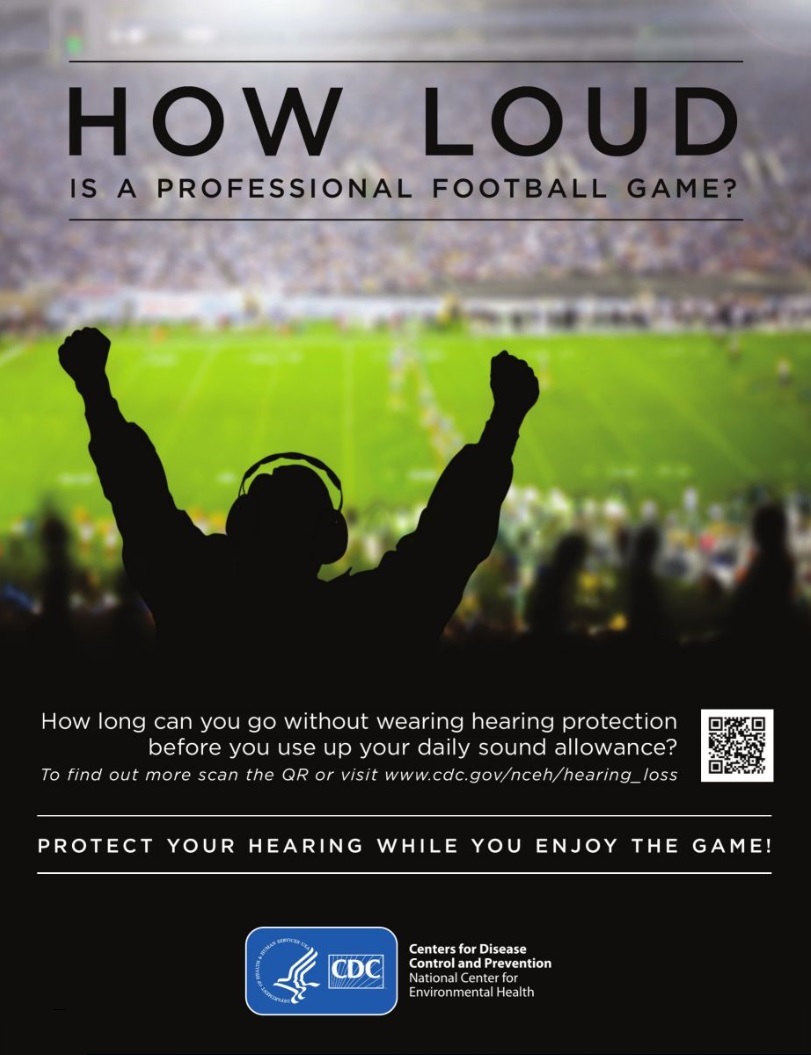
Here is the good news — the CDC is getting into the act. The CDC National Center for Environmental Health (NCEH) has procured one-page advertisements in official printed sports programs for the National Hockey League (NHL), the National Basketball Association (NBA) and the National Football League (NFL). This critical effort in public awareness will include a link to their online quiz about noise exposure and hearing health. Thank you, CDC.
Learn more on how “Loud Noise Can Cause Hearing Loss.”
Recent Posts
Treatment of Parkinson’s Disease with Virtual Reality
In a recent article by Mahato et al. (2026), 250 individuals with Parkinson’s disease were assigned to either traditional physical therapy or virtual reality (VR)-based…
SPAN Q4 Meeting Reminder
The American Academy of Audiology’s State Policy Advocate Network (SPAN) will hold its fourth-quarter meeting next week, on October 28, 2026, from 8:00–9:00 pm ET….
Virginia Audiology Regulations Open for Public Comment
The Virginia Board of Audiology and Speech-Language Pathology published a proposed rule allowing for ABA certification to serve as an alternative pathway for audiology licensure….
