









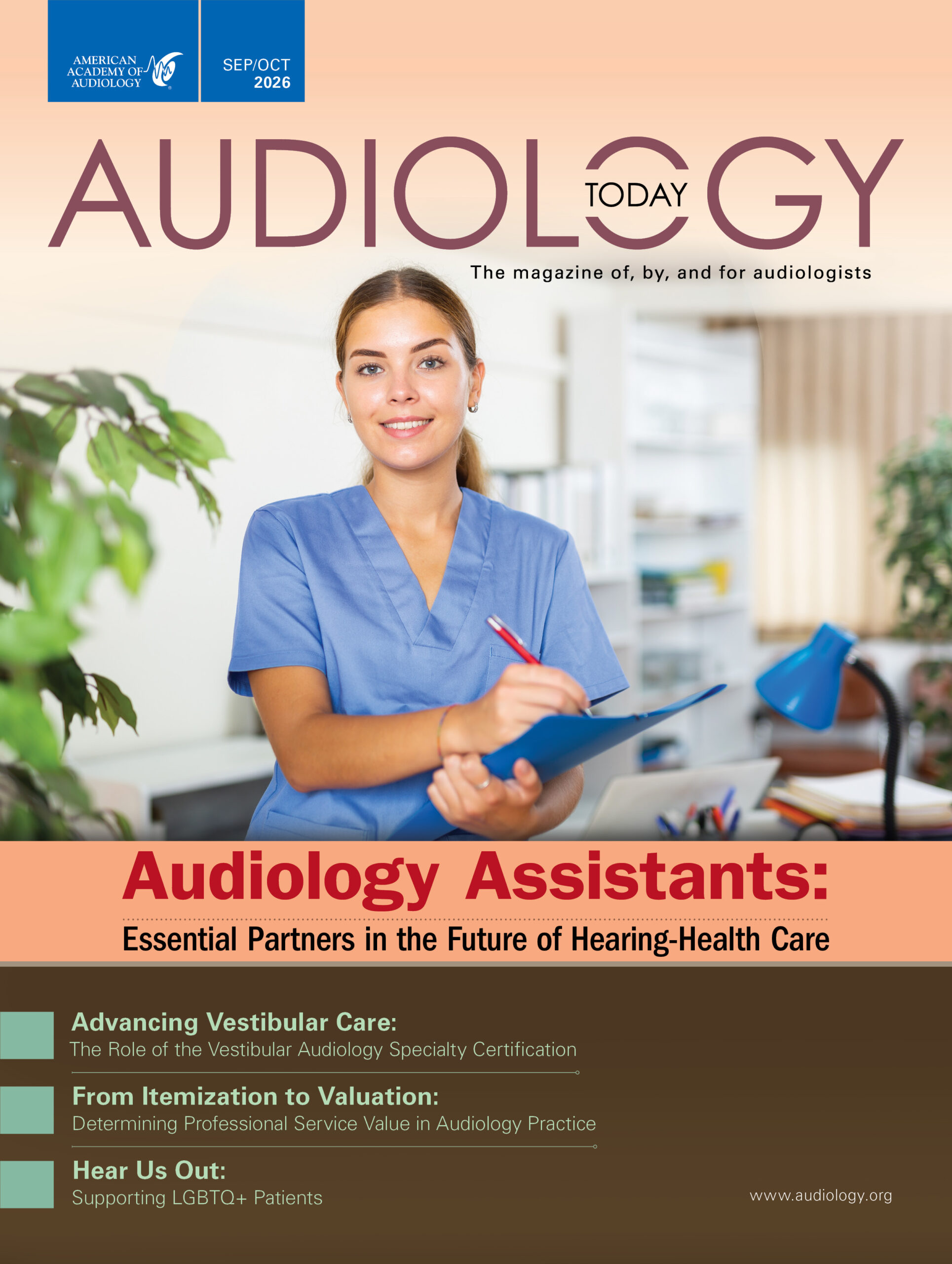

September/October 2026 Issue
The September/October 2026, Volume 38, Number 5, Audiology Today issue has been released. Enjoy the most recent issue!
Audiology Today Archives
The Audiology Today issues from 1988 to the present are available as member-only content. Please click the button below to access the archives.
About Audiology Today
Audiology Today, the award-winning publication of the American Academy of Audiology, has been a trusted resource for audiologists for over 35 years. Each bimonthly issue offers evidence-based research, expert insights, and practical ideas to enhance clinical practice and patient care.
Interested in having your work featured? View our editorial guidelines and submit your manuscripts to Editor-in-Chief Erin Schafer, PhD.
Why Submit an Article?
Sharing your insights in Audiology Today is a powerful way to advance the audiology profession and connect with peers. By submitting an article, you can:
-
Contribute to Evidence-Based Practice
-
Have Your Work Recognized
-
Enhance Your Professional Visibility
-
Foster Collaboration
-
Shape the Future
Find Articles from Audiology Today
Keyword Search
Date
Audience
Business Topic
Clinical Topic
Issues


Audiology Assistants: Essential Partners in the Future of Hearing-Health Care
An audiologist spends part of the morning troubleshooting Bluetooth connectivity, replacing wax guards, and walking a patient through hearing aid insertion for the third time. Meanwhile, diagnostic evaluations are backed up for weeks, new referrals continue to arrive, and another patient calls asking if someone can help with their over-the-counter (OTC) hearing device.

Advancing Vestibular Care: The Role of the Vestibular Audiology Specialty Certification
Watching the splashdown of the Artemis II space capsule was thrilling and awe-inspiring. But, to me, hearing former astronaut Scott Kelly and neurosurgeon Sanjay Gupta accurately discuss the impact of zero gravity and space travel on the astronauts’ vestibular systems was even more exciting.

From Itemization to Valuation: Determining Professional Service Value in Audiology Practice
In Part 1 of this series, we explored how bundled pricing models can unintentionally obscure the value of audiologists’ professional services, limit reimbursement opportunities, and create financial risk for practices (Murphy et al., 2026).