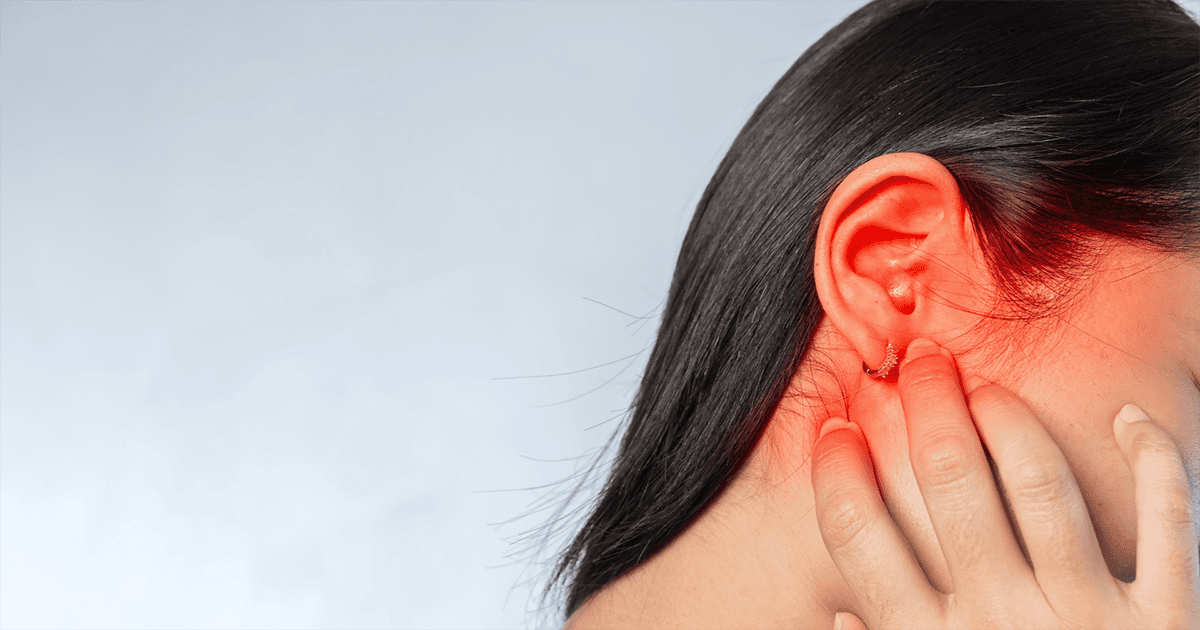


The connection between air pollution and hearing loss has been established for over a decade, with most research focusing on adults. Studies have also shown that maternal exposure to polluted air containing metals, such as uranium, lead, chromium, copper, etc., can lead to adverse birth outcomes such as congenital anomalies. However, the relationship between air pollution, specifically maternal residential exposure to metals, and hearing loss in their children has not been well explored.
A retrospective cohort study of over 141,000 births from 2008–2017 revealed that maternal exposure to 9 heavy metals in the air was positively associated with an increased risk of newborn hearing screening failure (Huang et al., 2025). Specifically, maternal exposure to antimony, barium, beryllium, chromium, cobalt, manganese, mercury, vanadium, and zinc during pregnancy was positively associated with failed newborn hearing screens. The authors conclude that this study provides new information on the link between air pollution and newborn hearing health and suggests this risk factor is modifiable.
Reference
Huang, Y., Lin, Y., Lavin, R. P., Luo, L., Luo, M., et al. (2025). Industrial air pollution and newborn hearing screening failure. Journal of Hazardous Materials, 492, 138241.
Recent Posts
Why Do Elephants Have Such Big Ears?
African elephants have the largest ears of any animal, sometimes growing more than six feet long and five feet wide. An elephant’s ears are used…
Founders’ Day
The 32 audiologists gathered in Houston, Texas, in 1988 to discuss the formation of a national association of audiologists. On January 30, 1988, 32 audiologists met…
House Minibus Advances with Mixed Outcomes for EHDI
Last week, the U.S. House of Representatives passed a fiscal year (FY) 2026 minibus appropriations package that includes the Labor, Health and Human Services, and…