

Frank Wartinger, AuD
Academy Member for over 15 years
Owner of Philadelphia Music Audiology and Earmark Hearing Conversation
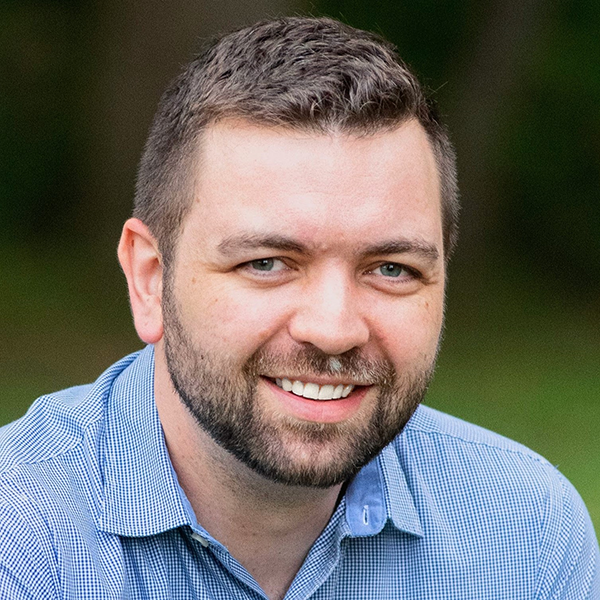
About Dr. Wartinger
What are your clinical interests?
Preventative hearing care for music folks has always been my passion. My background in audio engineering and music production, coupled with my personal tinnitus and hearing issues, is what led me to apply to grad school, and it remains the driving force behind all my professional decisions. Of course, clinical music audiology is a small part of the broader umbrella of “hearing loss prevention”, which has led me to meaningful work in pediatric hospitals, occupational health hearing conservation programs, and educational roles with universities and industry. Since 2023, for instance, I have represented the American Academy of Audiology on the Council for Accreditation in Occupational Hearing Conservation (CAOHC), helping shape the present and future of clinician training for workplace hearing monitoring and management.
What do you/did you love the most about your job?
Problem solving is at the center of the Venn diagram between clinical audiology and self-employment. I’m happiest when I have a well-defined problem to work on. When a patient seeks care for their hearing concern, they’re presenting a problem and expressly asking for help addressing, managing, or perhaps resolving it. As a specialist with shared experience in the music industry, I’m uniquely positioned to help in a direct and meaningful way, which is extremely gratifying. I love that my current role expands the types of problems I can address, manage, and hopefully resolve through practice management. As any business owner knows there are no shortage of problems, so I’m a happy camper… as long as I find the time to properly address them.
What company or organization do you work for right now? If you’re retired, where did you last work?
I own and operate both Philadelphia Music Audiology (a clinical practice that does exactly what it says on the tin: providing hearing services in clinic, onsite, and virtually to musicians and music industry professionals) and Earmark Hearing Conservation (an occupational health certification training provider and clinical professional supervisor service). Being self-employed also allows me to explore collaborative opportunities, such as an exciting partnership with Aviom (a personal mixer developer) to create the first stage and studio monitoring system that can test hearing and provide real-time compensation based on a performer’s auditory profile. In the last few years, I also became an adjunct professor teaching Hearing Conservation and Music Audiology at both Wayne State University in Detroit and my alma mater, Salus at Drexel University.
What’s a project you’re working on right now? Why is it meaningful to you?
There are too many active projects to list, but they all revolve around one focus: improving the accessibility of best-practice music audiology care for musicians and music industry professionals. Right now, I’m launching a not-for-profit effort: the Directory of Music Audiology Providers (D’MAP for short and for giggles). Designed to support tours, musicians, and audiologists seeking specialists for their most complex music patients, this online resource (musicaud.org) lists contact and practice details for dedicated audiologists who specialize in music audiology. I have plans to grow the site into a hub of resources, including support for all audiologists looking for resources and guidance when working with this population.
How has your career benefited from being a member of the Academy?
Early on, the Academy gave me a sense of professional pride and belonging, along with many aspirational models and goals. At my first conferences (now approximately 17 years ago) there was no shortage of presenters, leaders, and mentors who shared this (sometimes strange) obsession with sound and hearing. Now, I find that the Academy have become an invaluable partner in advancing the niche specialty of music audiology through its support of the 2020 Clinical Consensus Document, the continued commitment to sharing continuing education on the topic, and for tolerating my three AAA Convention learning lab presentations on the topic since 2018.
Any tips or advice for new members on how to best leverage their Academy membership?
I’ll share a simple piece of advice that was given to me when I was in the SAA: talk to the presenters, ask questions, and don’t be afraid to say, “I don’t know… yet.” Sharing ideas and building connections is the purpose of the membership and the conferences. Through wide-eyed curiosity and dumb luck, I’ve been able to meet the researchers, presenters, trailblazers, and visionaries in Music Audiology—and I now have the absolute privilege and joy of calling many of them colleagues, collaborators, and friends.
Fun Facts
Where is your hometown?
I was born and raised in and around Rochester, New York. Grew up in the adorable rural village of Honeoye Falls until moving to the giant suburb of Webster for middle and high school.
If you could bring back one TV show that was canceled, which one would you bring back?
Red Dwarf, a strange and charming British sci-fi comedy from the 90s. Of course, nostalgia is a toxic impulse, and like most things in the 90s is probably best left as is.
What are you reading or listening to at the moment?
Brian Eno and Talking Heads are on constant rotation on my turntable, which is convenient setup next to my mountain of administrative desk work for easy access.
Best vacation you’ve ever been on?
After spending a month in South Korea, I actively tried to convince my family that we could move there permanently and I could work remotely. Sadly, more stable minds won out, we returned, and it remains a treasured vacation.
Who is your hero, and why?
Mead Killion (1939–2025) was a towering figure in our field, a talented musician, and a venerable mentor. His foresight and tenacity created almost all of the clinical tools I rely on for patient care, and his generosity and kindness showed myself (and many young professionals) that we work in a uniquely collaborative, tightknit, and musical field. Mead, your work has sustained for decades and will continue to sing out long after your passing.
If you could have any superpower, what would it be and why?
I would like 1 percent of whatever flavor of genius superpower Mead Killion possessed. Or the ability to fly, as that would be a gas.
