


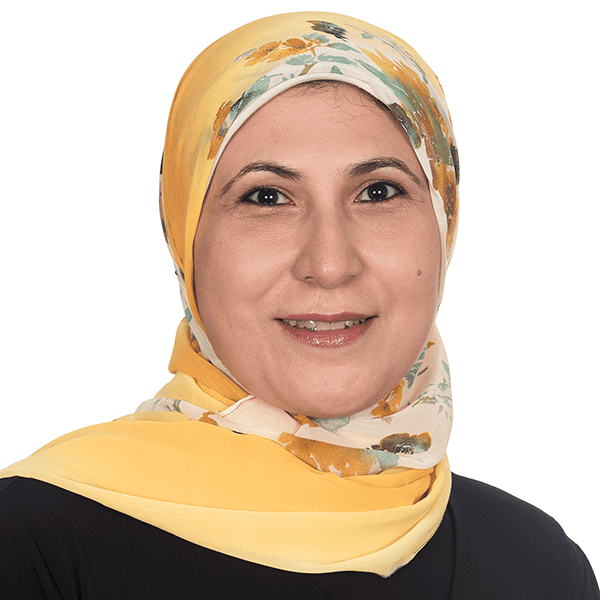
Marwa Abdrabbou, PhD
Member of the Diversity, Equity, Inclusion and Belonging Committee
What is your background in audiology?
My path to audiology began during my medical school rotation in the otolaryngology department, where I developed a deep interest in hearing and balance disorders. I was especially drawn to the field because hearing loss, unlike many acute medical conditions, can have a profound and lasting impact on quality of life for individuals and their families, particularly in cases of sudden loss. This experience inspired me to pursue an ENT residency with a focus on audiology. I have now been a doctor of audiology for 25 years, working in hospital-based clinical settings. In addition to my clinical work, I am passionate about teaching and research, which motivated me to earn a PhD from the University of North Carolina at Greensboro, where I strengthened my research expertise. My current research interests include tinnitus and ototoxicity monitoring in patients with head and neck cancer.
Why do you volunteer with the Academy?
I volunteer with the Academy because it allows me to give back to a profession that has significantly shaped my career. Volunteering allows me to contribute to the advancement of audiology while connecting with colleagues who share the same values and goals. I am especially passionate about promoting health equity, which makes my service on the Diversity, Equity, Inclusion, and Belonging (DEIB) Committee particularly meaningful. Working alongside audiologists who are equally committed to this mission has been inspiring and rewarding. I have also valued the chance to review submissions for the annual conference over the years. Overall, volunteering with the Academy has been one of the most fulfilling and impactful parts of my professional journey.
What is one thing that you can say volunteering has done for you and your personal success as an Audiologist?
Volunteering with the Academy has been incredibly rewarding and has greatly contributed to my development as both an audiologist and a researcher. It keeps me connected with colleagues across clinical, academic, and research settings, offering a broader and more integrated perspective on the profession. Over the years, I have served in a variety of volunteer roles, each providing the opportunity to learn from diverse perspectives and innovative ideas shared by fellow committee members. These experiences have strengthened my strategic thinking, teamwork, and decision-making skills, skills I apply every day in both my clinical practice and my research.
What would be the ultimate gift you could receive?
I believe in the value of continuous learning, so for me, the ultimate gift would be the opportunity to learn something new, whether it’s acquiring a new skill or gaining knowledge that I can apply in my personal or professional life. I find that learning not only enriches me but also allows me to give back by sharing that knowledge with others.
What game show do you think you could win?
I don’t watch many game shows, but if I had to pick one, I think I could win The Price is Right. I believe my skill at making educated guesses would serve me well in the game.
