







On September 28, the Academy held its first ever virtual Capitol Hill Day. Academy leadership and other advocates “met” with congressional offices from across the country to advocate for the Medicare Audiologist Access and Services Act (H.R. 1587/S. 1731m).
Participating audiologists hailing from academia, private practice, and research settings educated congressional members and staff about the critical need to “modernize” the treatment of audiology in the Medicare system in order to improve beneficiary access to care and bring the program in line with virtually all other public and private payers.
H.R. 1587/S. 1731 would designate audiologists as Medicare “practitioners,” allow them to be reimbursed for both diagnostic and treatment services and remove the outdated physician order requirement. Advocates also stressed that any proposal to add a hearing benefit to Medicare must include all of the H.R. 1587/S. 1731 provisions in order to ensure that the new benefit is effective and meaningful.
Other issues discussed included the Allied Health Workforce Diversity Act, Ally’s Act as well as the future of telehealth in a post-pandemic landscape.
The Academy is grateful to all of those who participated in this important event to advance the profession of audiology.
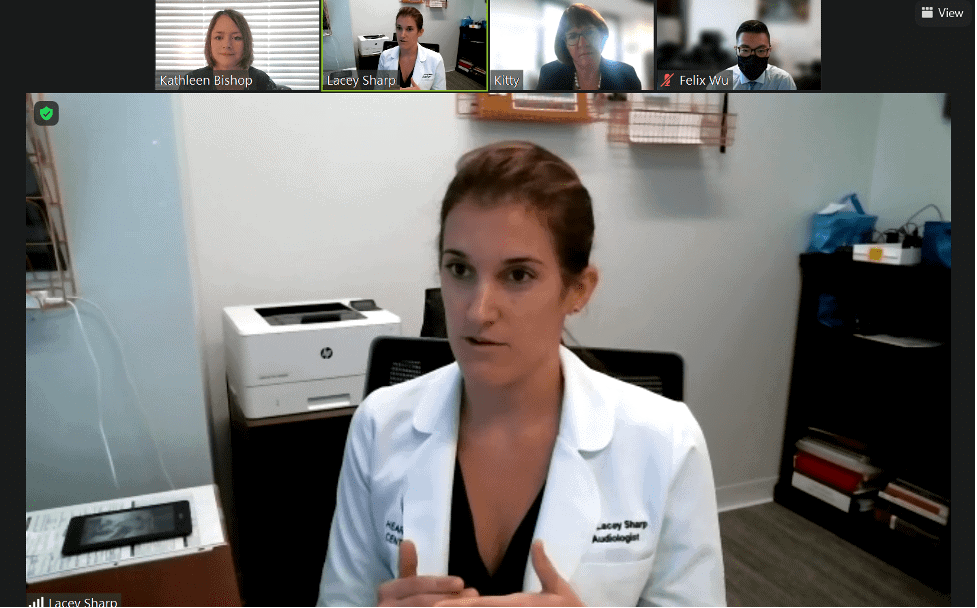
Academy Member: Lacey Sharp, AuD
Academy Staff: Kathleen Bishop and Kitty Werner, MPA
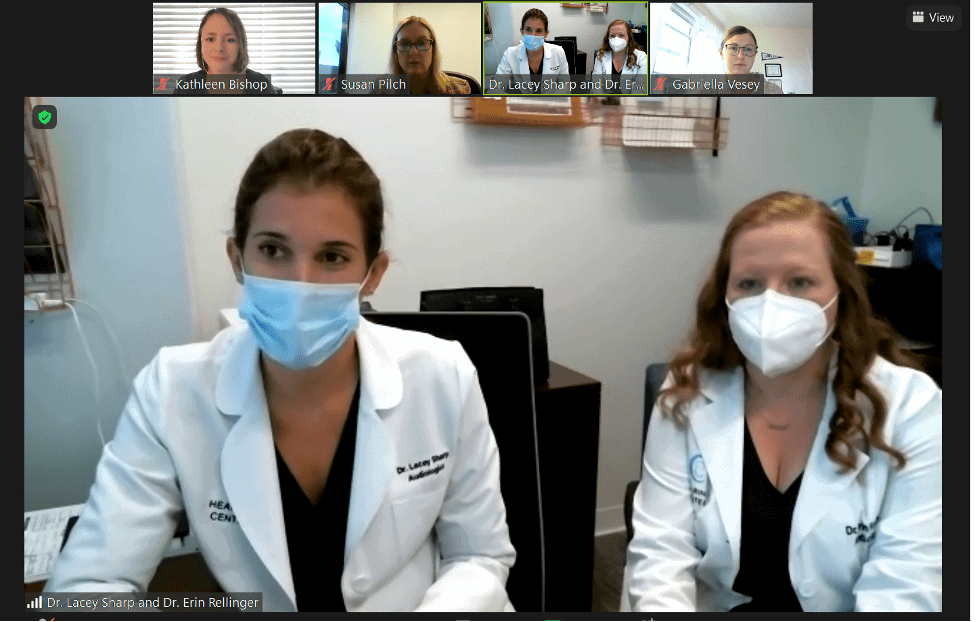
Academy Members: Lacey Sharp, AuD, and Erin Rellinger, AuD
Academy Staff: Kathleen Bishop and Susan Pilch, JD

Academy Members: Jessica Messersmith, PhD; and Linsey Jorgensen, AuD, PhD; and Catherine Palmer, PhD
(Academy past president)
Academy Staff: Kathleen Bishop (not pictured)

Academy Member: David Zapala, PhD
Academy Staff: Patrick Gallagher, MBA, and Kathleen Bishop
Show your support for audiology and H.R. 1587/S. 1731, contact your congress person via the Academy’s Legislative Action Center.
Recent Posts

Aerobic Physical Activity in U.S. Adults: An Updated Report
In 2022, the American Academy of Audiology shared an update regarding two data briefs about physical activity in the United States. One was related to…

Adding Vestibular Training to Post-Stroke Care
A recent study by Mishra and colleagues (2026) examined individuals with chronic post-stroke disequilibrium. Participants (n=18) received either traditional balance therapy or balance therapy plus…
No Surprises Act Reform: One to Watch in the Lame-Duck Session
As Congress prepares for the lame-duck session following the November midterm elections, health care legislation could be among the issues lawmakers seek to address before…
