



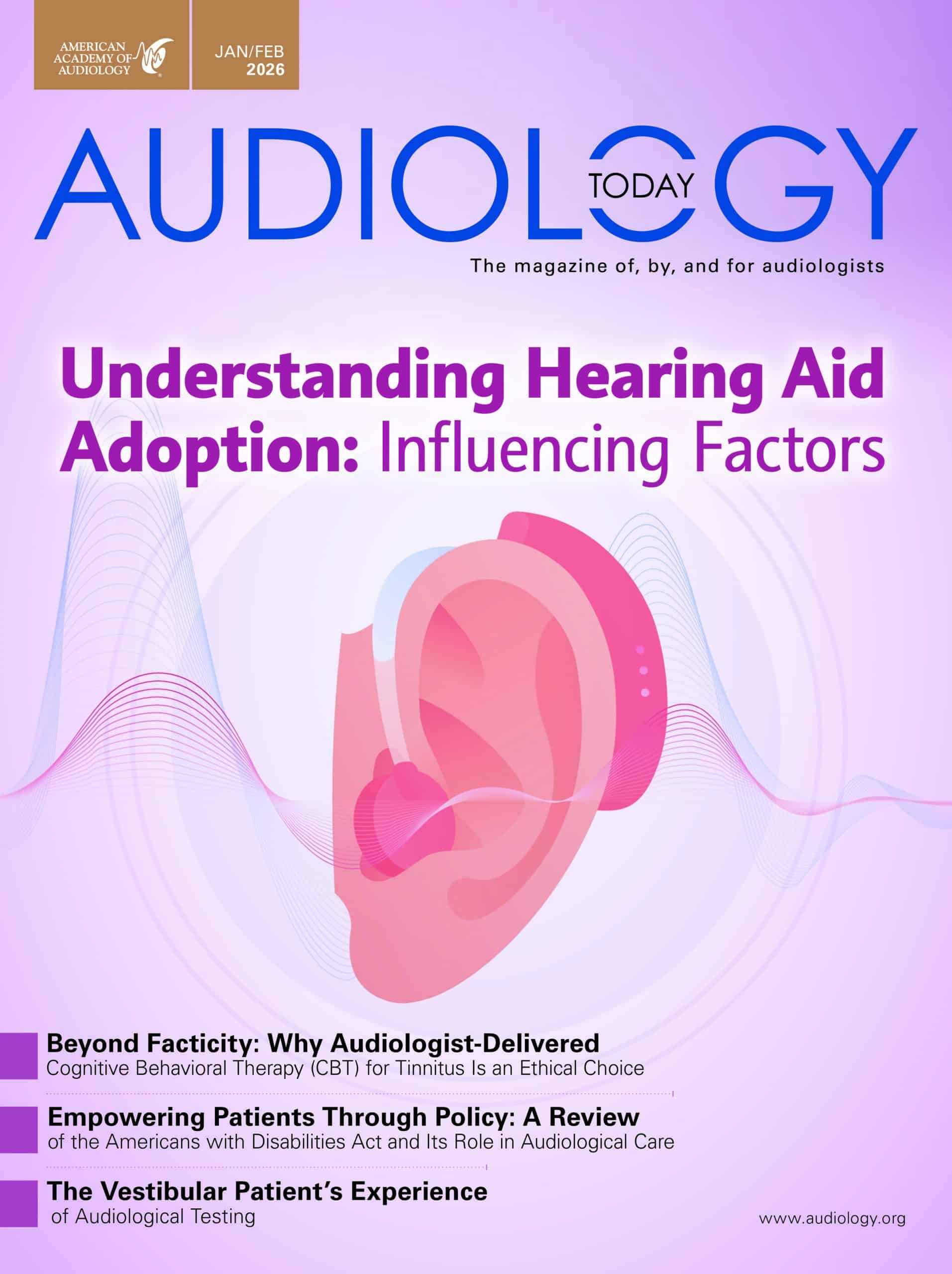

January/February 2026 Issue
The January/February 2026, Volume 38, Number 1, Audiology Today issue has been released. Enjoy the most recent issue!
Audiology Today Archives
The Audiology Today issues from 1988 to the present are available as member-only content. Please click the button below to access the archives.
About Audiology Today
Audiology Today, the award-winning publication of the American Academy of Audiology, has been a trusted resource for audiologists for over 35 years. Each bimonthly issue offers evidence-based research, expert insights, and practical ideas to enhance clinical practice and patient care.
Interested in having your work featured? View our editorial guidelines and submit your manuscripts to Editor-in-Chief Erin Schafer, PhD.
Why Submit an Article?
Sharing your insights in Audiology Today is a powerful way to advance the audiology profession and connect with peers. By submitting an article, you can:
-
Contribute to Evidence-Based Practice
-
Have Your Work Recognized
-
Enhance Your Professional Visibility
-
Foster Collaboration
-
Shape the Future
Find Articles from Audiology Today
Keyword Search
Date
Audience
Business Topic
Clinical Topic
Issues


Understanding Hearing Aid Adoption: Influencing Factors
This study explores the factors that influence hearing aid (HA) adoption, highlighting the significant role of physician recommendations alongside cost and insurance coverage. Findings show higher-than-expected adoption rates, offering valuable insights for audiologists and physicians to better guide patient-centered care.

BEYOND FACTICITY: Why Audiologist-Delivered Cognitive Behavioral Therapy (CBT) for Tinnitus Is an Ethical Choice
This article explores the ethical and philosophical case for audiologist-delivered cognitive behavioral therapy (CBT) in tinnitus care. Drawing on Sartre’s and Merleau-Ponty’s ideas, it argues that audiologists who pursue specialist CBT training act not outside their profession, but in authentic response to patient need, research evidence, and the silence of institutions.

Empowering Patients Through Policy: A Review of the Americans with Disabilities Act and Its Role in Audiological Care
This article examines the Americans with Disabilities Act (ADA) as a foundational legal framework for audiologists, highlighting its relevance across clinical practice, patient advocacy, and telehealth accessibility. Through practical applications and case examples, it underscores how ADA literacy empowers audiologists to promote equity and inclusion for individuals with hearing and balance disorders.